Showing posts with label soap making. Show all posts

Learn How To Make A Simple Homemade Soft Hair Conditioner

By // No comments:
Hair,hair,texture,abstract

Welcome again to DIY Knowledge Base. In my previous articles, we have discussed how you can make soaps yourself, be it liquid soap or bar soaps. Today, we will be talking about how you can make a simple home-made hair conditioner. One beautiful part of this training is that making a home-made hair conditioner is very easy and cheap, You only need two ingredients, an empty bottle, and an adventurous heart. So relax and enjoy as you go through this article.

This conditioner we are about to learn works very well and more so it is safe for all hair types.  Make it with confidence, an open mind, and an adventurous heart.

Ingredients You Are Going To Need

  • 1 Tbsp ACV (apple cider vinegar) - I suggest always using the raw kind "with the mother." We buy Bragg's in bulk 1 gallon jugs.
  • 1 cup water - Like I said, one of the ingredients is free. Use whatever kind of water you wish - we use tap which is English for "out of the sink."
The best bet for you is combining ingredients in a clean re-purposed squirt bottle for your conditioner. Double up on ingredients until you fill your bottle - the recipe above makes 8 ounces.

Instructions

Simply shake the bottle before each use and gently massage into the hair and scalp for a minute or two and rinse. After drying, your hair will not smell like vinegar. Trust me.

Notes

This homemade conditioner is the best option for use after a homemade shampoo. Whether you are making a castile soap-based shampoo, or a baking soda-based shampoo, the vinegar rinse will smooth the hair and eliminate the greasy, sticky feeling some of these homemade shampoos may leave.

Safe for all hair types

The ACV in this conditioner smoothes the hair cuticle and balances the pH of your scalp and hair. This conditioner is safe for all hair types and gently conditions without coating your hair and scalp with waxy chemicals, unlike most commercial conditioners.
Always question the safety of store-bought personal products, never assume they’re safe, and always understand the ingredients. 
How to Produce Detergent

By // No comments:

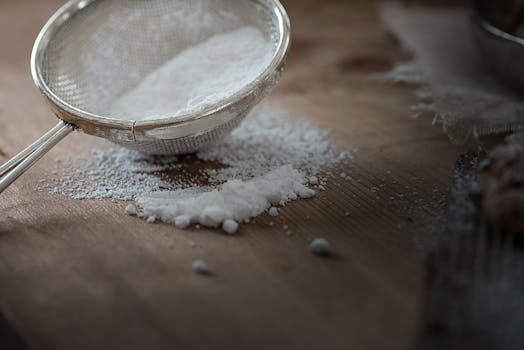
Free stock photo of food, wood, metal, table
Hello friends, in my previous article, I wrote about how you can make liquid soap yourself either from scratch or from a bar soap. Not everyone subscribes to liquid soap, especially when it comes to laundry. In this article we will be teaching you how you can make detergent. The merits of having your own personal business is far more greater than buying from a store. Before I continue with this tutorial, let’s first get familiarized with detergent.
Detergents are chemicals that are effective surface and  coming instead of soap in many of the uses and areas,  in the home and even the factory are preferred in some uses because of its specification is better than soap in hand uses this . The chemical composition is different for the installation of soap, but the same mechanism by the soap, not adversely affected by hard minerals in the water.

There are many types  of detergents, but often detergents can be divided mainly to:

·        General detergent laundry, or detergents for all purposes.

·        Cleaners Uses easy.

·        Detergents harsh surfaces.

·        Detergent dish-washers mechanism.

What You Will Need
1. Colourant/Dye : Most people prefer fresh blue.
2. Caustic soda solution
3. Unsaturated fatty acid oil
4. Sulphuric Acid
5. Perfume: This is not necessary, but hey, you want to entice your customers as much as possible, so you have to give them a pleasurable sensation when they use your product.
6. Soda ash
7. Catalyst
8. Ammonia solution

Free stock photo of hands, water, blur, motion

Procedures

Step 1: Pour 5 litres of the fatty acid oil (unsaturated) into a bucket. Make sure it is a big container, of maybe about 30 litres.
Step 2: Measure 5 litre of caustic soda solution in another bucket.
Step 3: Add the colorant into the first bucket. You can also add your perfume at this stage.
Step 4: Add soda ash into the mixture. You can also add hydrogen as a catalyst.
Step 5: Add sulphuric acid. Some people prefer to use sulphuric acid because of the dangerous nature of sulphuric. Sulphuric acts faster, however.
Note that add this stage, you the mixture begins to dry up, harden and break down. You have to be quick with whatever you intend to add next. Quickly add your colour and perfume if you have not added it earlier.
Step 6: Turn the other bucket of caustic soda solution into the mixture.
Step 7: Add ammonia solution to turn down the heat. Make sure your perfume is strong enough to overcome the smell of ammonia. Some people leave it out, though.
Step 8: Leave the mixture to dry or put it in an oven, and once its fully dry, grind it into powder.


How To Make LIQUID SOAP (used For Washing Dishes, Cars, Clothes, Windows Etc.)

By // No comments:
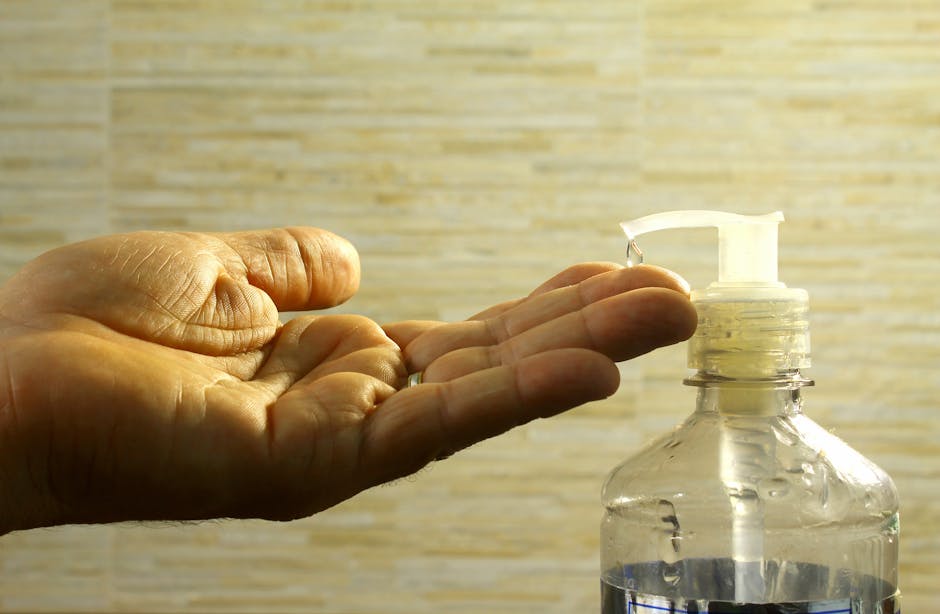
Close-up of Human Hand


In one of my previous articles, I wrote on How To Make Liquid Soap From Bar Soap , but not all people subscribes to conversion of bar soap to liquid soap. If you are one of those people who prefer making liquid soap from scratch then this tutorial will do you a lot of good. In this tutorial, we will be talking about how you can make liquid soap from scratch. Something good about it is that you can get all the materials and chemicals needed easily around you, another thing is that the procedure involve in making liquid soap is easy. So why not take time and read this helpful article on how you can make liquid soap from scratch.

The following Ingredients is for 25 litres of water

1. Sulphoric Acid 1/2 (you will use all). This serves as Foaming agent. The amount of water to be used in diluting the sulphoric acid is 3 litres of water.
2. Natrosol 1/4 Quantity (you will also use all) This serves For thickening. You will dilute the Natrosol in 15 litres of water.
3. STTP 1/4 Quantity (you will use all). This agent serves as Booster for foaming. You will dilute the STTP in 3 litres of water.
4. Soda Ash 1/4 Quantity (also use all). This also serves as Thickening agent. Dilute it in 3 litres of water.
5. Caustic Soda 1/16 Quantity (use all) To remove dirts 2 litres
6. Colour (green-optional) As required or Quantity sold for #50 (use all) To give colour As required
7. Texapon 1/4 Quantity (use all) Foaming agent Mixed in the same water with sulphonic acid
8. Perfume 1/8 Quantity sold for #350 (use all) For good fragrance It’s already in liquid form.
9. Containers - - -

WARNING: It is recommended to use protective rubber hand-glove when mixing each ingredients separately to avoid any hazard resulting from direct body contact before final mixture.

METHOD:

  • Mix small quantity of caustic soda in a bowl (bowl A) with some water.
  • Mix the Soda ash with some water in a different bowl (bowl B) as well.
  • Mix the STPP with some water in another bowl (bowl C) too.
  • Soak the Laurel Rice/Rice in another bowl (bowl D); making a total of four bowls.
  • Get a bucket (bucket A) and mix Sulphonic acid and the Texapon together until they are well dissolve
  • Leave for 30 minutes for the chemicals to dissolve properly. You can as well to speed up the action
  • Now take a big bucket that can take 30 litres of water and fill it half of it with clean water
  • Gradually add the Natrozol into the big 30 litres bucket and gently stir
  • After that pour the contents of small bowls (A, B,C,D) on after the order respectively into the Big bucket containing Natrozol. That is bowl A before bowl B then bowl C before bowl D.
  • Then pour the content of bucket A in the big bucket containing all other mixture and stir. Don’t stop stirring until 10 – 15 minutes.
  • After that, add a little quantity of Formalin for preservative. Like earlier stated this chemical is dangerous. Handle with cautious, besides you can do without it.
  • Add some colour and stir for 5 minutes
  • Also add some perfume and stir for another 5 minutes


How to Make Liquid Soap From Bar Soap

By // No comments:

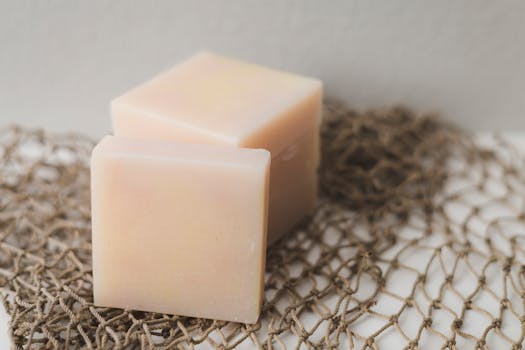
Brown Sliced Soaps

Are you running through liquid soap quickly? Store-bought liquid soap can be expensive, especially if you go for soap made with natural ingredients. Why pay so much just for a bottle of soap when you can make your own at home?


Pick out a bar of soap to use. 

You can make liquid soap from any bar of soap you have around the house. Use whatever leftover or half-used bars you have, or put some extra thought into your choice to create a liquid soap you can use for a specific purpose. For example:

· Use a bar of facial soap to make a liquid soap you can use on your face.

· Use a bar of antibacterial soap to make a good cleansing hand soap to use in your kitchen or bathroom.

· Use a bar of moisturizing soap to make a liquid soap you can use as body wash.

· Use unscented soap if you want to add your own scent to create customized liquid soap.

Grate the soap into a bowl. 

Use a fine cheese grater to grate the entire bar of soap into a bowl. Use the finest grater you have so that when it's time for the soap to melt, the process goes more quickly. You can cut the soap into chunks if that helps you grate it more easily.

·         You should end up with about 1 cup (229 g) of soap flakes. If you have less, grate a second bar of soap.

·         This recipe can easily be doubled or tripled if you want to make a lot of liquid soap. It makes a great gift, especially when it's stored in pretty jars.

Blend the soap with boiled water. 

Boil 1 cup (235 ml) of water, then pour into a blender along with the grated soap. Whip the water and soap until it takes on the consistency of paste.

·         Making soap in your blender may leave a residue that's hard to clean out, so if you'd prefer not to use it, you can make your soap on the stove instead. Simply add the soap flakes to the water once it has started to boil on your stove.

·         Try making soap in the microwave as another alternative. Place a cup of water in a microwave safe dish, bring it to a boil in the microwave, add the flakes, and let them sit for a few minutes to melt. Place the dish back in the microwave and heat it up in 30-second increments if it needs more heat.

Add glycerin to the mixture. 

Glycerin acts as a moisturizer for the skin, making liquid soap a little gentler on your body than regular bar soap. Mix in 1 tsp. (5 g) glycerin, stirring until it is thoroughly combined.

Customize it with extra ingredients. 


Here's where you can get creative with your liquid soap, especially if you started with an unscented bar. Consider adding the following ingredients if you want to make your liquid soap special:

·         Mix in honey or lotion to add moisture.

·         Stir in a few drops of essential oil to scent the soap.

·         Add 10 to 20 drops each of tea tree and lavender essential oils to make your soap naturally antibacterial.

·         Use some natural food coloring to change the color. Avoid using standard chemical-based coloring, since it's not good for your skin to absorb.

Create the right consistency. 

Continue to whip the mixture in the blender once it has thoroughly cooled. Gradually pour water into the mixture as it whips until your soap is an ideal consistency. If you're not using a blender, just stir in the water and whisk it vigorously.


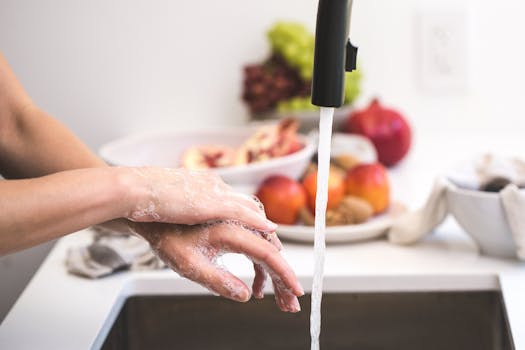
Free stock photo of hands, water, blur, motion

Pour the soap into containers. 

Once it has completely cooled, you can pour it into jars or pump containers using a funnel. If you have a large amount of soap, put whatever doesn't fit in your containers into a large bottle or jug. Keep the remaining soap on hand to use when refilling your smaller bottles.


Powered by Blogger.